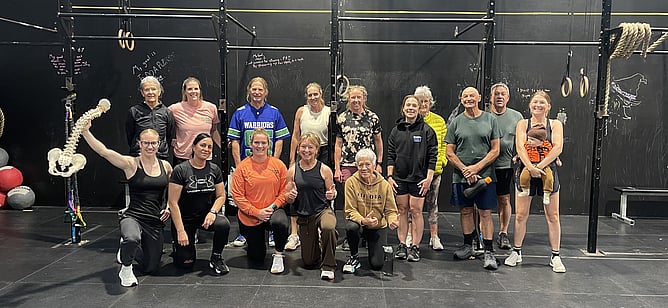
One of our Chiropractors, Mai, recently presented a workshop on loading the spine safely at one of our local CrossFit gyms!
Safely loading your spine is about more than just keeping a straight back when lifting. Its about maintaining a neutral spine, engaging your core appropriately, managing the load you are lifting, and understanding what your body is currently able to tolerate.
Understanding Load and Capacity
Load is the demand placed on your body during a movement. This could be: the weight you are lifting, how many repetitions you are doing, how quickly you are lifting it, how much range you are using, how often you are lifting, how fatigued you are, and how complex the movement is.
Capacity is your body’s ability to withstand load. How much can your body currently tolerate? Capacity can be influenced by; muscle strength and endurance, tendon/bone/joint tolerance, sleep, nutrition, recovery and previous or current injuries.
As we get stronger, fitter and more resilient, capacity grows, and thus we are able to withstand more load.
Neutral spine is strong when lifting
Our spines are built to move. They are made up of 24 moving segments, with a cushion in between, called our intervertebral discs. These discs help to absorb and distribute load throughout our spine. Our spine has 3 natural curves (not to be confused with a sideways curve or scoliosis), allowing for greater weight distribution and acting like a spring.
Neutral spine:
Cervical curve (lordosis) - our neck naturally curves inwards.
Thoracic curve (kyphosis) - our mid back naturally curves outward.
Lumbar curve (lordosis) - our lower back or small of our back naturally curves inwards.
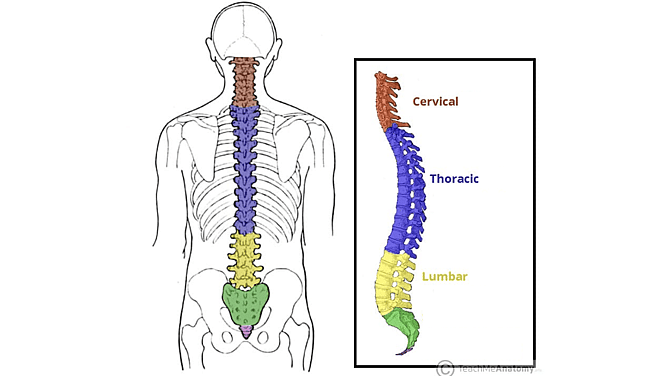
Remember, everyone is different, and each person's natural curve will be different from the next. What is important is that we maintain a neutral spine when lifting by not allowing excessive arching or rounding of the back. This promotes optimal spinal support and will reduce the likelihood of back pain whilst lifting.
Neutral spine is strong when lifting for a few reasons, the most important being that it protects against sheer forces. When weight is evenly distributed on the spine and on the discs and joints, you limit the risk of sheer forces which can overload your spine and lead to injury. Neutral spine also gives you the optimal length-tension relationship. What this means is that your big powerful leg and core muscles that are needed for lifting are at the appropriate length due to where they attach on the spine and pelvis, this means you can generate maximal force and take unnecessary load off your muscles and tendons.
In the clinic, my favourite way to demonstrate a neutral spine is by using a stick behind my back with 3 points of contact; 1. The belt line 2. between the shoulder blades 3. the back of the head. Aligning the stick in this way means that you can keep contact with the stick on these 3 points as you practise hinging and squatting techniques. It provides a tactile cue and feedback about where your spine is in space to reduce excessive arching or flattening of the spinal curves.
Importance of Core Control
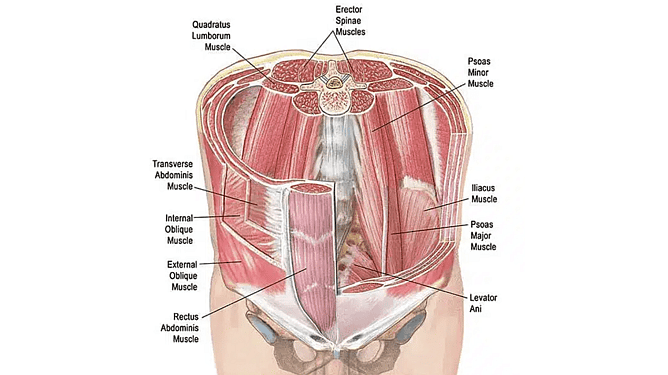
During lifting, core control is arguably just as important as maintaining a neutral spine.
Your core is more than just your 6 pack muscles. It is a 360 degree muscular cylinder made up of many muscles running in different directions, and has a roof (your diaphragm), and floor (your pelvic floor). The sides of the cylinder consist of:
Abdominal muscles (rectus and transverse abdominus, external and internal obliques)
Iliopsoas muscle
QL and Erectors
These muscles all work together to create a strong brace to keep the spine in good alignment and prevent excessive movement under heavy loads. By bracing your core before a lift, you are setting your spine up with a strong foundation to lift from, thereby optimising strength and preventing injury.
There are many different cues we can use to appropriately engage our core muscles which I teach in the clinic.
Key takeaways:
Your spine is strong and adaptable. Manage load, adapt when needed and keep moving. Capacity can be built progressively. Technique is a tool- lift with a strong brace and neutral spine.
Thank you to CrossFit Kia Ora fitness Taupo for allowing me the opportunity to share my knowledge with your community!
Remember, back and neck pain can occur for numerous different reasons. While poor lifting technique or core control can sometimes be the reason for back pain, it may not be the reason for yours. If you are experiencing symptoms, it is important to get checked by your chiropractor to appropriately diagnose and treat the issue.

